Affiliate Disclosure: Some links in this article are affiliate links. If you purchase through them, IronThaw earns a commission at no extra cost to you. Our rankings are independent — we do not accept payment for placement.
Red light therapy has grown faster than almost any other wellness category in the last two years — search interest is up over 300% since 2024 — and the panels being sold range from legitimate medical-grade devices to glorified nightlights with a marketing budget. The category's rapid growth has outpaced most buyers' ability to tell the difference.
This guide covers what red light therapy actually does at the cellular level, which wavelengths and specs matter, how to evaluate a panel before buying, and our top picks across three price tiers.
Does Red Light Therapy Actually Work?
Yes — with real caveats about dose and device quality. Red light therapy, formally called photobiomodulation, is supported by hundreds of peer-reviewed studies. The mechanism is well understood: red and near-infrared light is absorbed by cytochrome c oxidase, an enzyme in the mitochondrial electron transport chain. This absorption releases nitric oxide that had been inhibiting the enzyme, improving electron transport efficiency and increasing ATP (cellular energy) output.
The downstream effects that are best supported by clinical evidence include:
- Muscle recovery: Reduced delayed-onset muscle soreness and faster recovery markers after exercise in multiple randomized trials.
- Skin rejuvenation: Increased collagen synthesis and reduced fine lines with consistent use over 8–12 weeks.
- Wound healing: Accelerated healing rates in both acute wounds and certain chronic wound populations.
- Joint pain: Modest but measurable reductions in pain and stiffness for conditions like osteoarthritis in several controlled studies.
Where the evidence is weaker: claims around fat loss, hair regrowth beyond specific FDA-cleared devices, and broad "anti-aging" or mood claims often outpace what the research actually supports. Be skeptical of any panel marketed as a cure-all.
660nm vs. 850nm: What's the Difference?
Nearly every credible red light panel is built around two wavelength bands, and understanding the difference matters more than any other spec:
660nm (Visible Red Light)
660nm sits at the edge of visible light and penetrates skin to a depth of a few millimeters. It's the wavelength most associated with surface-level benefits: collagen production, skin tone and texture improvement, and superficial wound healing. If your primary goal is skin health, 660nm exposure is the more directly relevant wavelength.
850nm (Near-Infrared)
850nm is invisible near-infrared light that penetrates significantly deeper — several centimeters into tissue, reaching muscle and even bone in some estimates. This is the wavelength most relevant to muscle recovery, joint pain, and deep tissue effects. Because it's invisible, you won't feel or see the same intensity cues as with 660nm, which is part of why irradiance specs matter more for near-infrared claims.
Most quality panels combine both wavelengths in roughly equal proportion, letting you address surface and deep-tissue targets in a single session without needing two devices.
Irradiance: The Spec That Actually Matters
Irradiance, measured in milliwatts per square centimeter (mW/cm²), tells you how much light energy is actually reaching your skin at a given distance — and it's the single most important spec, more important than total wattage or LED count, both of which are easy to inflate in marketing copy.
Clinical studies generally use irradiance in the range of 20–100 mW/cm² at the treatment site, with total delivered dose (irradiance × time) landing between 4 and 60 J/cm² depending on the target tissue. A panel that doesn't publish an irradiance chart at multiple distances is a red flag — it usually means the number wouldn't look competitive if disclosed.
Practical buying rule: look for at least 50 mW/cm² at 6 inches. Below that, you'll need unreasonably long sessions to hit a clinically meaningful dose.
Treatment Distance
Irradiance falls off sharply with distance — often by half or more between 6 and 18 inches, depending on the panel's optics. General guidelines:
- 6–12 inches: Best for facial or targeted skin treatment, 10–15 minutes per session.
- 12–24 inches: Better for full-body or muscle recovery coverage, 15–20 minutes per session, trading some irradiance for broader coverage area.
Always check the manufacturer's own irradiance-by-distance chart rather than assuming a panel rated powerful at 6 inches performs the same at 24 inches — the drop-off is rarely linear.
Best Red Light Therapy Panels in 2026
1. Mito Red Light — Best Budget Panel
The MitoADAPT 2.0 panel from Mito Red Light delivers dual 660nm/850nm wavelengths with genuinely competitive irradiance (over 50 mW/cm² at 6 inches) for under $300 — a price point where many competitors quietly cut corners on diode quality or fail to disclose irradiance at all. Flicker-free operation and a straightforward, no-frills design make it our top pick for anyone getting started.
⭐ Best Budget Pick
Mito Red Light MitoADAPT 2.0 — Under $300
Dual 660nm/850nm wavelengths, strong irradiance at 6 inches, zero flicker. The best value entry point into red light therapy.
Check Price — Mito Red Light2. Higher Dose — Best for Combined Heat + Light
Higher Dose's red light devices, including the diodes built into their sauna blanket line, are a strong choice if you want photobiomodulation bundled with heat therapy rather than as a standalone purchase. Their dedicated face and body panels also test well on irradiance, and the brand's build quality and customer support are consistently strong across their whole product line.
Best for combined heat + light
Higher Dose Red Light Devices
Strong irradiance, excellent build quality, and the option to combine with infrared heat in one device or session.
Check Price — Higher Dose3. NovaaLab — Best Full-Body Panel
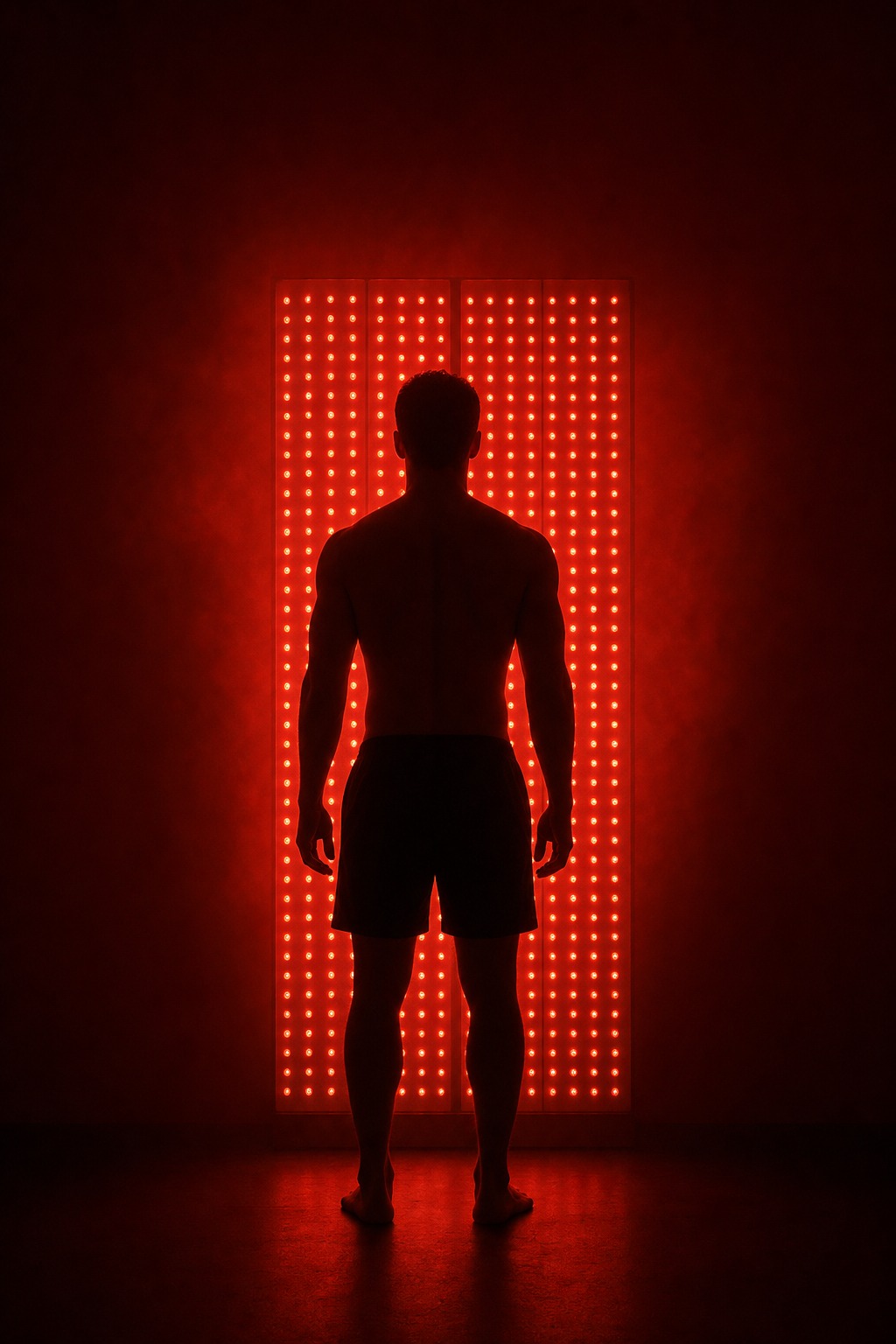
For serious full-body coverage, NovaaLab's larger panels ($700–$1,200) deliver high irradiance across a wide surface area, letting you treat your entire torso and legs in one session rather than repositioning a smaller panel multiple times. This is the tier to consider once you're using red light therapy consistently and want to cut total session time.
Best full-body panel
NovaaLab Full-Body Panel — $700–$1,200
Wide-coverage panel for full-body sessions with high irradiance across the entire surface, cutting total treatment time for serious users.
Check Price — NovaaLabWhat to Avoid
- Panels with no published irradiance data. If a manufacturer only lists wattage or LED count without an irradiance chart, treat that as a warning sign.
- Single-wavelength cheap panels claiming to do everything. A $40 panel claiming skin, muscle, hair, and mood benefits with a single unlabeled wavelength is almost never delivering a clinically meaningful dose.
- Devices with visible flicker. Poor-quality drivers cause flicker that isn't always visible to the naked eye but can cause eye strain over repeated sessions — look for "flicker-free" as an explicit spec.
How to Build Red Light Into Your Routine
Most protocols call for 10–20 minutes per session, 3–7 times per week, at the distance recommended for your panel's irradiance profile. Red light pairs well before heat exposure — see our IronThaw Recovery Stack guide for the full sequencing rationale — and, unlike sauna or cold plunge, it carries minimal systemic stress, making it reasonable to use daily. If you're assembling a full stack on a budget, our budget recovery stack guide shows where a red light panel fits into a sub-$500 setup, and our HSA/FSA guide covers which devices may qualify for pre-tax spending.
The Bottom Line
Red light therapy has real, peer-reviewed support — but only at meaningful irradiance and wavelength specs, which cheap panels frequently fail to deliver or disclose. For most people starting out, the Mito Red Light MitoADAPT 2.0 offers the best combination of price and verified performance. If you want a full-body session or plan to use it heavily, NovaaLab's larger panels are worth the higher price, and Higher Dose is the best choice if you want red light bundled with heat therapy in one device.
Subscribe for more
Get The Recovery Dispatch — Free
Weekly protocol notes, exclusive discount codes, and new guide alerts. 3,400+ subscribers.
Join the Newsletter